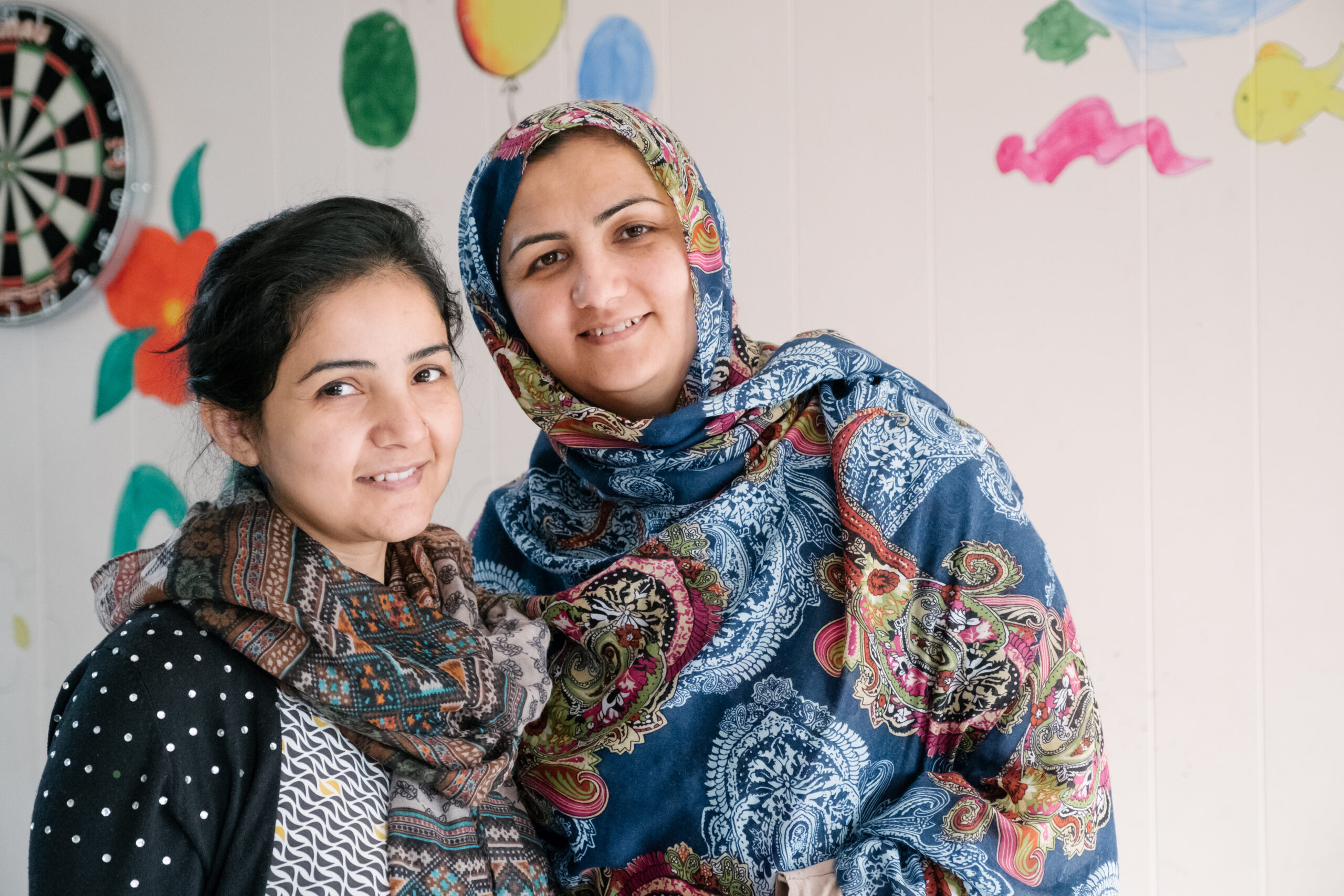
Refugee women are often absent from political discourse, research and the media. On this March 8, International Women's Day, let's make them visible because the story of women in need of international protection, often different from that of men, deserves to be told.

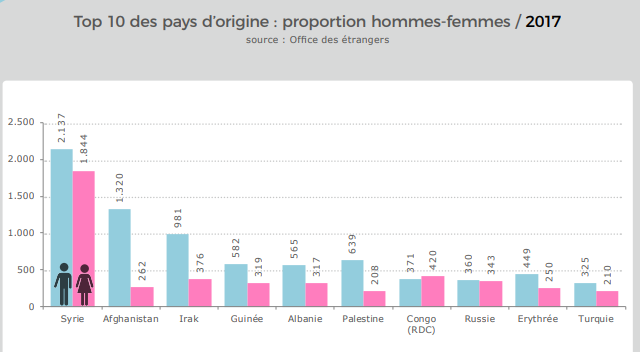
 This lower number can be explained for two reasons. On the one hand, resources (financial, cultural capital, etc.) are on average lower among women, which hinders their ability to undertake a long-distance migratory journey. On the other hand, due to the dangerous nature of the road, it is often the men who leave first in order to request asylum, and then bring their families via family reunification. [4]Family reunification is a procedure which allows members of a family to join the person residing in Belgium. Are considered part of the same family… Continue reading.Durant la procédure, les demandeuses de protection internationale sont assignées à des centres d’accueil collectifs. Toutefois, many do not feel safe there. A study by Vrouwenraad thus highlighted the bad practices of Belgian closed and open centers in terms of inclusion of the gender dimension and the promotion of gender equality in reception policy. This highlighted, among other things, the inadequacy of the psychological assistance offered to women, victims or not of violence, the absence of a support structure in terms of childcare, the inadequacy of the mix of dormitories and sharing of health infrastructure, and the lack of leisure activities or training specifically designed for women [5]Vrouwenraad. Asylum and migration: the reception of women in the centers. Towards a gender-sensitive reception policy. Final report. June 2010..À terme, c’est sur base d’un long entretien que le CGRA déterminera si la personne correspond ou non aux conditions du statut de réfugié ou de protection subsidiaire.
- Refugee status is granted to anyone who, because of their race, religion, nationality, membership in a certain social group or political opinions, risks being persecuted. [6]1951 Convention relating to the Status of Refugees, Article 1.. This definition does not explicitly refer to gender-related persecution. However, it is generally recognized that women belong "to a certain social group", and that the definition of refugee, correctly interpreted, therefore includes gender-related protection requests.
- Subsidiary protection status is granted to the person who cannot be considered a refugee, and in respect of whom there are serious grounds to believe that, if he were returned to his country of origin or, in the case of a stateless person , in the country in which she had her habitual residence, she would run a real risk of suffering serious harm, and who cannot or, taking into account this risk, is not prepared to avail herself of the protection of that country .
Attachments
Notes
| ↑1 | Women migrate on average as much as men. They represent approximately 48% of the 258 million international migrants in the world. The migrant refers to any person who leaves their place of residence and crosses a border in order to settle there. |
|---|---|
| ↑2 | Refugee status is granted to those who, because of their race, religion, nationality, membership in a certain social group or political opinions, risk being persecuted. An asylum seeker, or international protection applicant according to the new Belgian terminology, is a person who has submitted a request for protection and is awaiting status determination. |
| ↑3 | Resettlement consists of selecting and transferring refugees from a first host country – within which their integration prospects are limited – to a third country. |
| ↑4 | Family reunification is a procedure which allows members of a family to join the person residing in Belgium. Only the official spouse and minor children are considered to be part of the same family. The residence permit of people who join the resident via family reunification depends on living together for at least five years. This situation can create administrative dependence which forces the person to stay with their spouse even in the event of marital difficulties, and potentially be the source of blackmail within the family circle. |
| ↑5 | Vrouwenraad. Asylum and migration: the reception of women in the centers. Towards a gender-sensitive reception policy. Final report. June 2010. |
| ↑6 | 1951 Convention relating to the Status of Refugees, Article 1. |
| ↑7 | Human trafficking is a crime which consists of recruiting, transporting, transferring, harboring or receiving a person by use of force, coercion, deception or other means, with the aim of exploiting them. Exploitation may be sexual, forced labor or services, slavery or practices similar to slavery, servitude or organ harvesting. Protocol to Prevent, Suppress and Punish Trafficking in Persons, Especially Women and Children, supplementing the United Nations Convention against Transnational Organized Crime. |